 Blog
How to Plan Catering for a Multi-Day Corporate Conference…
Written by content writer
Last updated on November 9, 2026
A practical guide to planning food service, meal schedules, and catering coordination for multi-day corporate conferences.
How to Plan Catering for a Multi-Day Corporate Conference?
Introduction
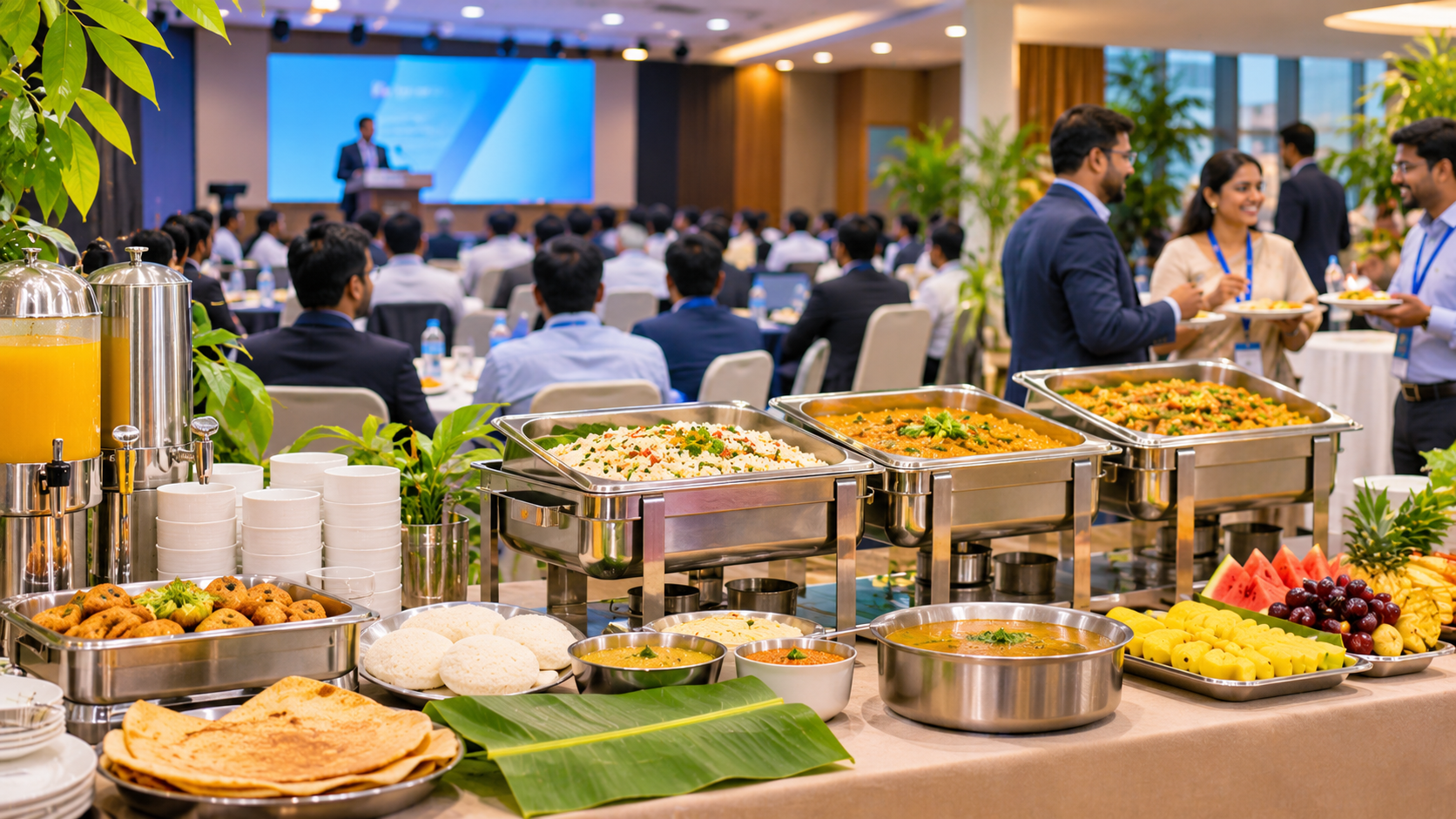
Organising a multi-day corporate conference requires careful planning, coordination, and attention to detail. From business meetings and training programmes to annual conferences and corporate gatherings, food service plays an important role in creating a comfortable experience for attendees.
Unlike a regular event, corporate conferences often follow a fixed agenda with multiple sessions, networking breaks and scheduled meal times. Catering arrangements must fit into this schedule without interrupting presentations or delaying important activities.
Staggered meal breaks, changing attendee numbers, dietary preferences and venue facilities can make catering operations more challenging. Without proper coordination, organisations may experience long queues, delayed service, food shortages or unnecessary interruptions.
A well-planned catering arrangement helps organisers manage these challenges while ensuring that attendees receive timely, hygienic and satisfying meals throughout the event.
In this guide, we explore how to plan catering for a multi-day corporate conference and coordinate food service around different sessions and meal breaks.
1. Understand the Conference Schedule Before Planning Catering
The first step in corporate conference catering is understanding the complete event schedule. Catering arrangements should be planned according to the conference agenda rather than treating every meal as a separate activity.
Organisers should identify:
- Conference start and end times for each day.
- Number of sessions and presentations.
- Morning and afternoon break timings.
- Lunch and dinner schedules.
- Networking sessions and special gatherings.
- Expected attendee movement between sessions.
For example, a conference with an early morning registration may require breakfast or refreshments before the first session begins. A short lunch break may require a different serving arrangement from an extended networking lunch.
Sharing the complete agenda with the catering team helps them plan food preparation, staff allocation, and service timings more effectively.
2. Estimate the Number of Attendees for Each Meal
One of the most important aspects of corporate catering is estimating the number of people who will participate in each meal.
The total number of conference registrations may not always match the number of attendees at every meal. Some participants may attend only selected sessions, while speakers, organisers and support staff may have separate meal requirements.
Instead of preparing one general guest estimate, create a separate attendance plan for each meal.
Consider the following:
- Total registered participants.
- Speakers, delegates and special guests.
- Organising committee members.
- Event management and technical support staff.
- Participants attending only selected conference days.
- Special dietary requirements.
An event-wise attendance sheet helps the catering team understand the expected service requirements and prepare accordingly.
3. Plan Catering Around Staggered Meal Breaks
Staggered meal breaks are common in corporate conferences, especially when multiple groups attend different sessions.
For example, one group may have lunch while another continues its training programme. This requires careful coordination to ensure that food service remains available during the planned windows.
A sample conference catering schedule may look like this:
| Conference activity | Catering requirement | Planning priority |
|---|---|---|
| Morning registration | Breakfast and refreshments | Ready before registration |
| Morning session | Beverage service, if required | Avoid interrupting presentations |
| First meal break | Lunch service | Coordinate attendee movement |
| Afternoon session | Tea and snacks | Timely preparation |
| Evening networking | Snacks and beverages | Match the event programme |
| Final session | Dinner, if required | Confirm closing schedule |
The schedule should be customised according to the actual conference agenda.
For staggered meal breaks, organisers should also discuss:
- Separate serving arrangements for different attendee groups.
- Availability of sufficient service staff.
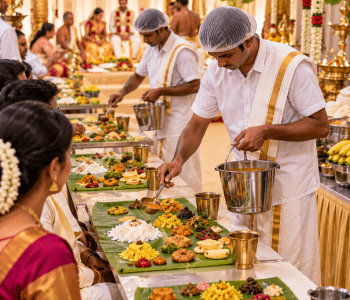
- Food replenishment during each service window.
- Dining space and movement between conference rooms.
- Communication between the event coordinator and catering supervisor.
A clearly defined service schedule helps prevent congestion and keeps the conference running smoothly.
4. Select a Suitable Menu for Corporate Attendees
Food selection should reflect the nature of the conference, attendee preferences, and event duration. A corporate menu should offer suitable variety while remaining practical for the planned service format.
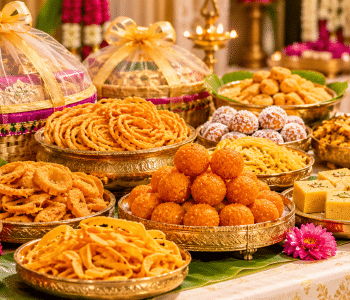
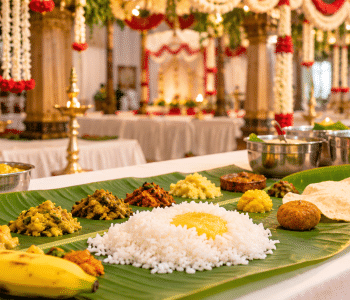
For South Indian vegetarian corporate catering, menu options can be customised for different occasions.
Breakfast arrangements
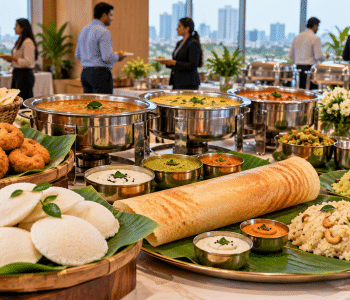
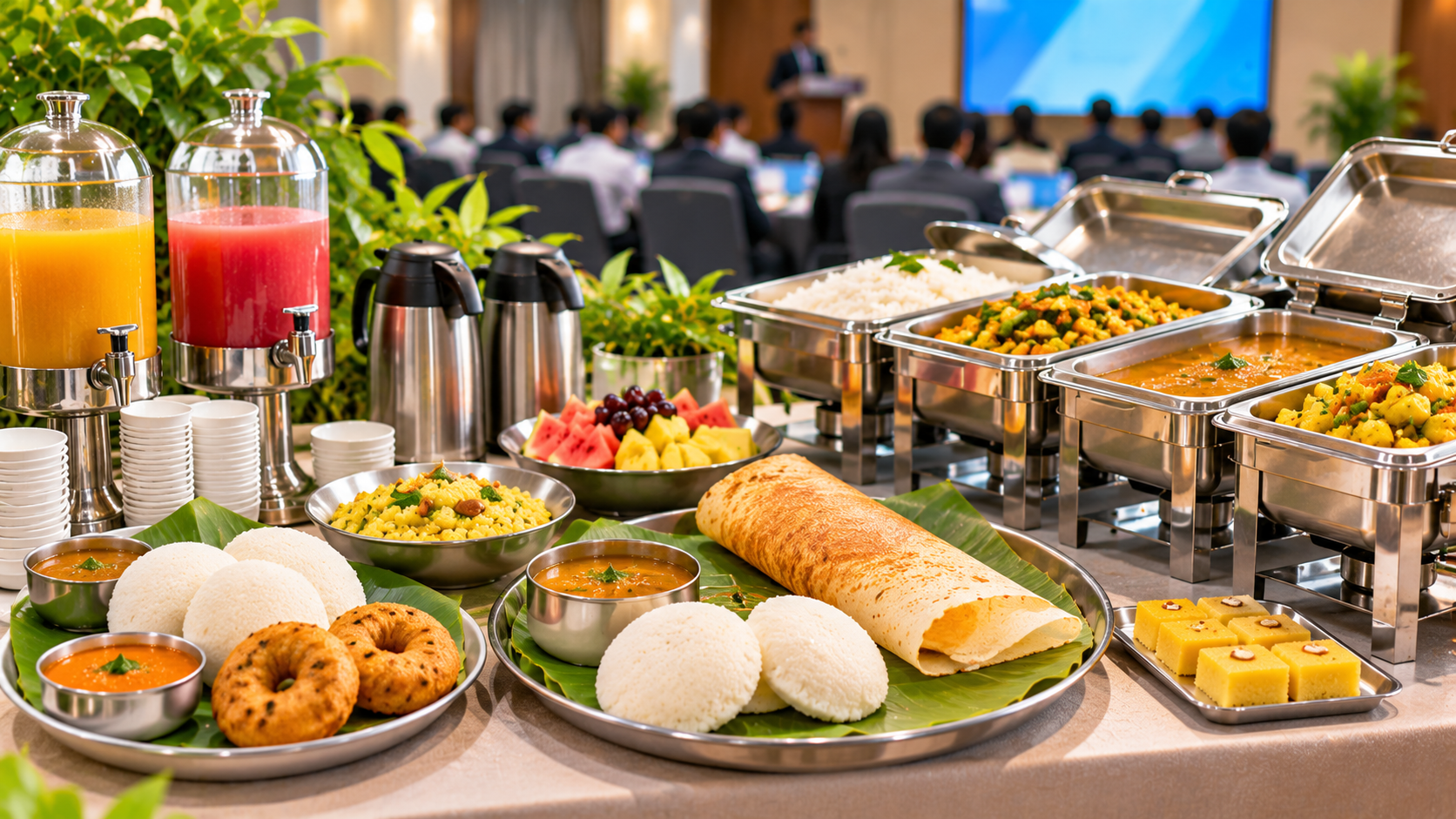
Breakfast may include traditional South Indian dishes such as idli, dosa, pongal, vada, and suitable accompaniments.
Lunch arrangements
Lunch can include a traditional vegetarian meal, rice varieties, vegetable preparations, sambar, rasam, curd, and other suitable menu selections.
Refreshments and tea breaks
Tea breaks can include beverages, traditional snacks, and light refreshments that are convenient to serve between sessions.
Dinner and networking events
Dinner arrangements can be planned according to the formality of the gathering, attendee preferences, and the event schedule.
Organisers can explore South Indian catering menu options to understand the types of dishes that may be suitable for their event.
5. Consider Dietary Preferences and Food Requirements
Corporate conferences often bring together attendees from different regions and backgrounds. Understanding dietary preferences in advance helps organisers provide a more comfortable dining experience.
During registration or event confirmation, organisers can collect relevant food preferences.
Important considerations include:
- Vegetarian food requirements.
- Food allergies and intolerances.
- Special dietary requests communicated by attendees.
- Clearly labelled food counters.
- Separate serving arrangements where necessary.
Any allergy-related requirements should be communicated directly to the catering team before the event. Food preparation and serving arrangements should be discussed to reduce the risk of cross-contact.
Clear menu labelling also helps attendees identify suitable food options without repeatedly asking service staff.
6. Check Venue Facilities and Catering Requirements
The venue plays an important role in determining how catering operations should be organised.
Before confirming arrangements, organisers should evaluate the available facilities and discuss operational requirements with the catering team.
Important venue considerations include:
- Kitchen and food preparation facilities.
- Water and electricity availability.
- Dining area capacity.
- Food storage and serving space.
- Loading and unloading access.
- Distance between the kitchen and dining area.
- Waste disposal and cleaning arrangements.
- Restrictions imposed by the venue management.
If food preparation and dining take place in different areas, transportation and food holding arrangements must also be planned appropriately.
A venue inspection or detailed discussion with the venue coordinator can help identify potential challenges before the conference begins.
7. Coordinate Catering Staff and Service Responsibilities
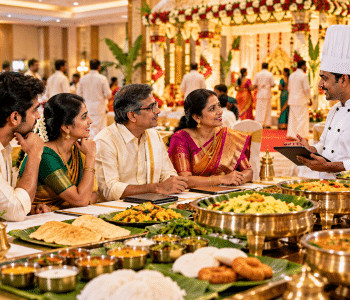
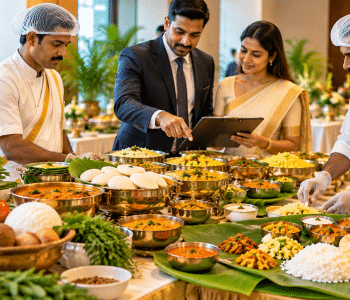
Even a well-planned menu can result in service delays if responsibilities are unclear. Corporate conference catering requires coordination between kitchen staff, serving personnel, event organisers and venue representatives.
A clear responsibility structure helps everyone understand their role.
| Team | Main responsibility |
|---|---|
| Event organiser | Shares the agenda and attendee information |
| Catering coordinator | Manages catering requirements and communication |
| Kitchen team | Handles food preparation and readiness |
| Service staff | Manages serving and guest assistance |
| Venue coordinator | Supports venue access and facility arrangements |
A designated point of contact should communicate schedule changes and operational updates to the relevant teams.
For large or multi-day events, a daily coordination meeting can help confirm the next day’s meal requirements and identify any changes.
8. Maintain Food Hygiene and Service Quality
Food quality and hygiene are essential throughout a corporate conference. When catering extends over multiple days, maintaining consistent preparation and service practices becomes especially important.
The catering team should follow suitable food safety and hygiene procedures, including:
- Maintaining clean food preparation and serving areas.
- Using safe food handling practices.
- Storing ingredients appropriately.
- Protecting prepared food from contamination.
- Maintaining suitable food holding conditions.
- Ensuring staff follow personal hygiene practices.
- Cleaning serving equipment and dining areas regularly.
Food should be prepared, transported, held and served using appropriate food safety procedures. Organisers should discuss these arrangements with their catering provider before the event.
9. Prepare a Backup Plan for Unexpected Changes
Corporate event schedules can change because of extended presentations, delayed sessions, additional participants, or venue-related issues.
A backup plan helps catering teams respond without creating unnecessary disruption.
Before the event, discuss how the team will handle:
- Changes in meal-service timings.
- Unexpected increases in attendee numbers.
- Delayed conference sessions.
- Changes to the venue schedule.
- Additional refreshments or meal requirements.
- Equipment or facility-related difficulties.
The event organiser should communicate changes as early as possible so that the catering team can review the preparation and service plan.
10. Choose a Corporate Catering Partner with Event Experience
Selecting a suitable catering partner is an important part of conference planning. Organisations should look beyond the menu and understand the provider’s ability to manage event schedules, service requirements and operational coordination.
Before confirming a catering provider, consider:
- Experience with corporate and multi-day events.
- Ability to customise menus.
- Food hygiene and preparation practices.
- Staff coordination and service arrangements.
- Understanding of venue requirements.
- Communication and support during the event.
- Ability to manage schedule changes.
Srinivasan Events & Caterers provides South Indian vegetarian catering and event-related services. Organisations can explore the available catering and event services to understand the arrangements that may suit their requirements.
Corporate Conference Catering Planning Checklist
Before the conference begins, organisers should confirm the following:
- Finalise the event dates and daily agenda.
- Prepare attendee estimates for each meal.
- Confirm menu selections and dietary requirements.
- Check kitchen and dining facilities.
- Share the service schedule with the catering team.
- Confirm staff responsibilities and communication contacts.
- Discuss food hygiene and serving arrangements.
- Plan for schedule changes and additional requirements.
- Review the arrangements before every conference day.
A well-organised checklist helps avoid last-minute confusion and supports a consistent dining experience.
Frequently Asked Questions (FAQs)
1. How should catering be planned for a multi-day corporate conference?
Start by reviewing the conference agenda, estimating attendees for each meal, selecting suitable menus, and confirming venue facilities. Coordinate food preparation and service timings separately for every conference day.
2. What is staggered meal service in corporate catering?
Staggered meal service means providing food to different attendee groups at planned intervals instead of serving everyone simultaneously. It helps manage dining space, queues, and conference schedules.
3. Can corporate catering menus be customised for different days?
Yes. Menus can be planned separately for each day based on the event schedule, meal requirements, attendee preferences, and the type of corporate gathering.
4. What should organisers check before selecting a corporate catering provider?
Organisers should review the provider’s event experience, menu flexibility, food hygiene practices, staff coordination, venue requirements, and ability to manage schedule changes.
5. How can food service delays be avoided during conferences?
Share the conference agenda in advance, confirm meal timings, estimate attendees accurately, allocate service responsibilities, and maintain regular communication between the organiser and catering team.
6. Can South Indian vegetarian catering be arranged for corporate events?
Yes. South Indian vegetarian menus can be customised for corporate meetings, conferences, training programmes, business gatherings and other events according to the organiser’s requirements.
Conclusion
Planning catering for a multi-day corporate conference requires more than selecting suitable dishes. It involves understanding the event schedule, estimating meal participation, coordinating staggered breaks, managing venue facilities, and maintaining consistent food service.
With proper preparation and clear communication, organisations can provide a smooth dining experience while allowing conference sessions and business activities to continue without unnecessary interruptions.
Srinivasan Events & Caterers understands the importance of food quality, menu customisation, and event coordination. Whether you are organising a corporate conference, business meeting, or multi-day gathering, the team can discuss catering arrangements based on your requirements.
Planning a corporate conference or business event?
Get in touch with Srinivasan Events & Caterers to discuss your event schedule, attendee requirements, and customised South Indian vegetarian catering options.
Contact: Srinivasan Events & Caterers